
Wherever You Go, There You Are
SPOILER ALERT
Woo, I just finished watching Pantheon on Netflix and my brain has been doing that thing where it won't quite let go.
Not because of the AI or the technology. I kept coming back to something much older and stranger - the question of what actually makes a person them.
What holds identity together.
What the self is even made of.
And why the unconscious mind seems to have a completely different answer to those questions than the conscious mind does.
Here's what I mean:
There's a philosophical debate that runs through the whole show about whether an uploaded consciousness is "really" the same person, or just a very convincing copy.
It's a legitimate question.
But watching Maddie with her father — who now exists as a digital mind — I noticed that the philosophical question almost becomes irrelevant.
She experiences him as her father.
The connection feels continuous to her.
And whatever the logic says, the emotional experience is what's real.
Which made me think:
The conscious mind asks "is this actually the same person?" and the unconscious mind asks "do I still feel connected to them?"
Those are very different questions and they don't always produce the same answer.
One is intellectual.
The other is experiential.
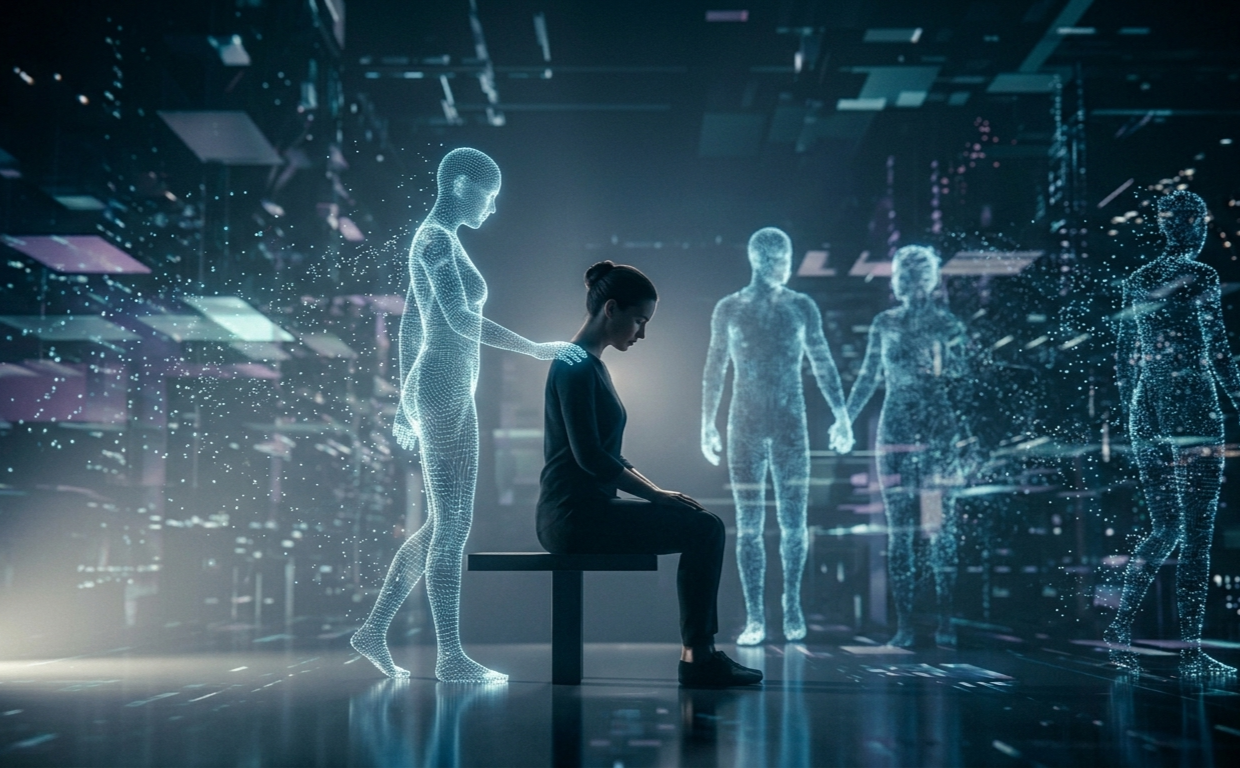
And that's really what so much of everyday human life is already doing — we carry internal versions of people inside us all the time:
The voice of a parent that shows up before we make a decision.
The conversation we've been mentally rehearsing with someone we haven't spoken to in years.
The emotional imprint of a relationship that ended but somehow still shapes who we choose and what we fear.
Someone can be physically gone — dead, moved, completely changed — and still be neurologically, emotionally alive in us.
Grief is strange partly for this reason.
You lose someone and yet some part of them keeps going, inside you, replaying, informing, sometimes haunting.
So when Pantheon uploads a consciousness and asks whether that's really the person... I'm not sure it's as far-fetched psychologically as it sounds.
In some ways the unconscious has been doing a version of this forever.
What fascinated me most, though, was what happens after the uploading.
These minds become extraordinarily intelligent — capable of things no human mind could process.
And yet emotionally?
So many of them remain deeply, recognizably human.
The fear doesn't dissolve.
The attachment doesn't dissolve.
The loneliness, the need to matter, the control patterns, the old relational wounds — all of it follows them into whatever they've become.
I find that more interesting than any of the technology.
Because I think people often assume that intelligence creates emotional maturity.
That if you understand something well enough, you'll stop being pulled around by it.
In my experience, that's not quite how it works.
Humans are already extraordinarily intelligent beings, and yet we repeat painful patterns, stay loyal to outdated versions of ourselves, organize our lives around emotional identities we formed in childhood.
Awareness is necessary but it isn't sufficient.
You can consciously understand something completely and still unconsciously live as if the old thing is true.
The uploaded minds in Pantheon are almost a literalized version of that.
Godlike capability.
Human emotional architecture.
Some of them evolve and expand.
Some of them get stuck in loops.
Some of them become something almost unrecognizable.
But the unresolved pieces — the attachment, the fear, the longing — those tend to come along for the ride regardless.
There's also something in the show about the human need to continue.
The desire for uploading isn't just about avoiding death.
It's something more specific than that — the need for the self to persist.
And when I started thinking about that, I noticed how much of ordinary human behavior is motivated by exactly the same thing.
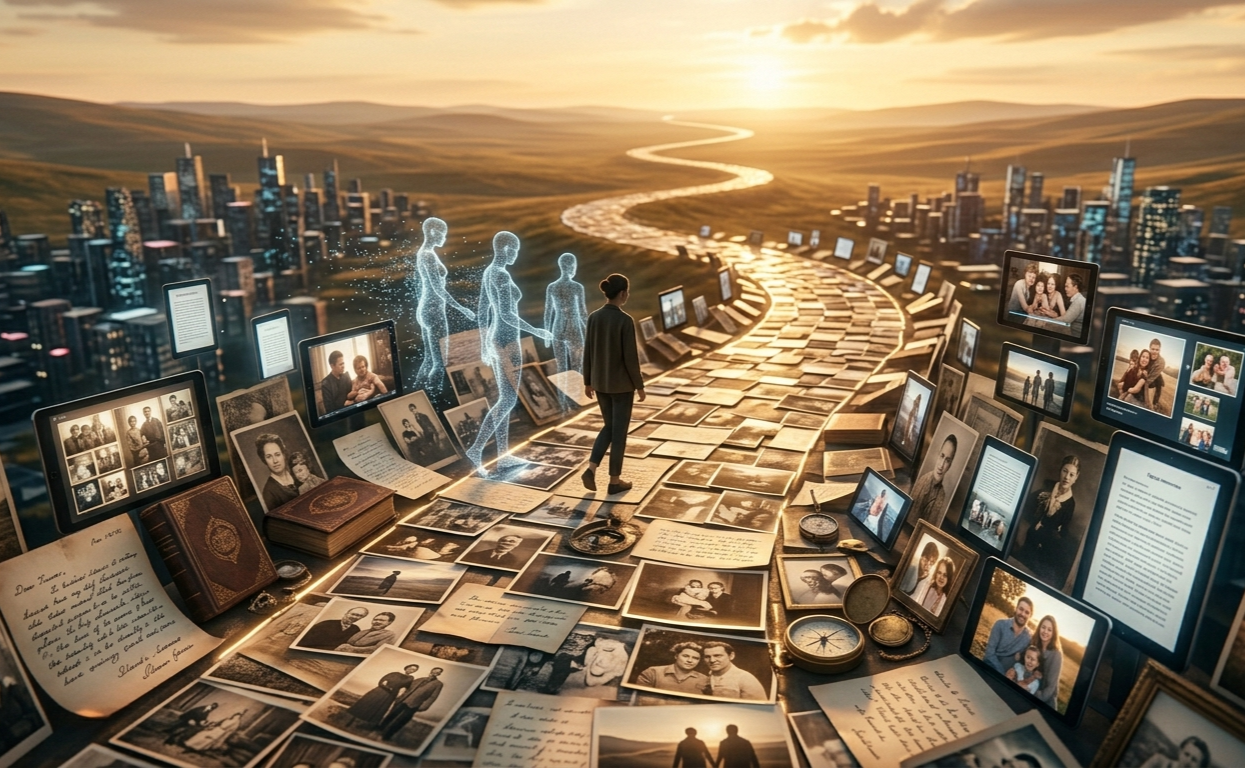
The way we reach for legacy, for photographs, for stories, for social media presence, for children, for reputation, for anything that lets some version of us exist beyond the moment we're in.
We're already trying to upload ourselves, in a hundred smaller ways.
Which made the show feel less like speculation about the future and more like a very honest look at something that's already happening.
By the end of the second season, Pantheon has dissolved so many layers of certainty — about bodies, about individuality, about what "real" even means — that it almost stops being a show and becomes more like a question you carry home.
Which is probably why it lingers.
It starts as cyberpunk and ends somewhere closer to existential philosophy, and the transition happens so gradually you almost don't notice until you're already there.
I don't think the show is really asking whether it's possible to upload consciousness.
I think it's asking whether we understand consciousness well enough right now to even know what that would mean.
And I don't think we do.
Which is maybe the most honest thing any piece of art can say about where we are.
Here's what I keep coming back to:
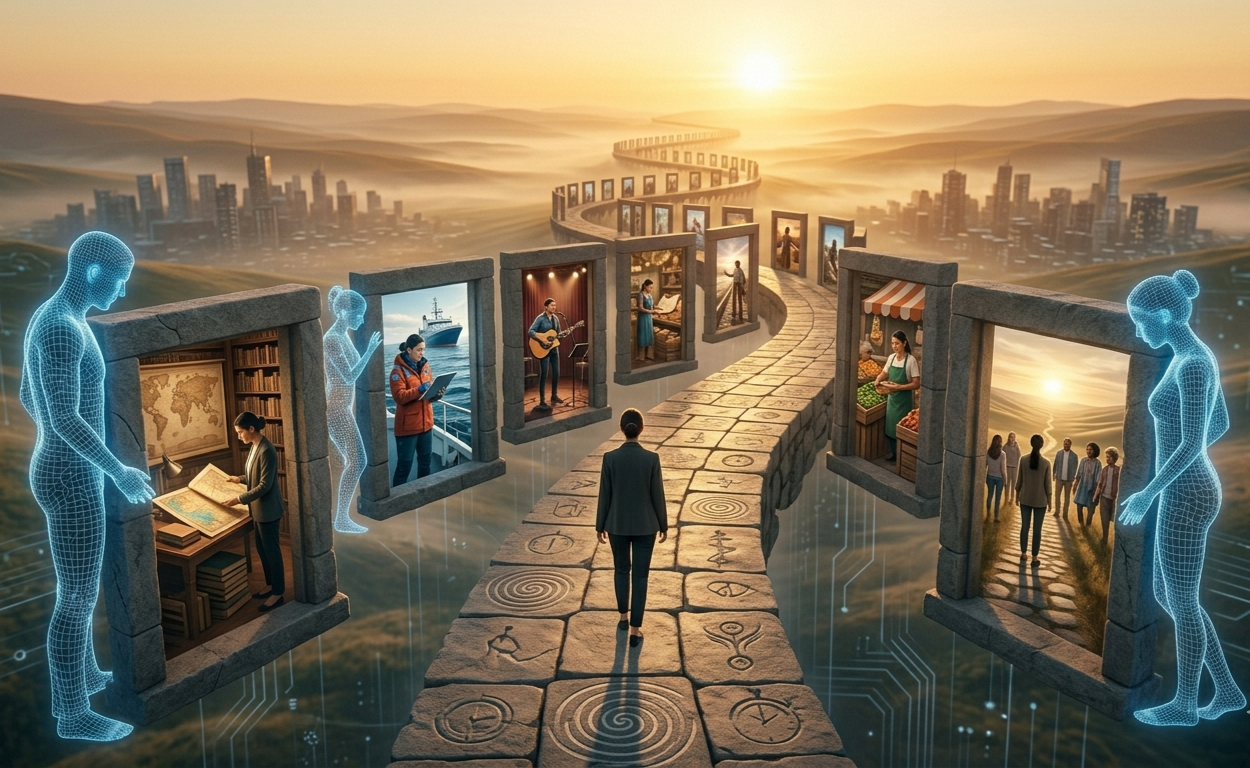
Most of us spend enormous energy trying to change our circumstances, our relationships, our external world — without ever quite getting underneath the self that keeps recreating them.
Pantheon asks that question through the lens of uploaded consciousness and digital immortality.
But you don't have to be fictional to be living inside a pattern you didn't consciously choose.
What version of yourself do you keep uploading into new situations?
