
Getting Past Survivor
Because “surviving” was never meant to be the whole story
If you’ve ever felt stuck replaying the same patterns — overthinking, people-pleasing, shutting down, or trying to prove your worth — you already know survival mode doesn’t end just because the danger did.
It lingers in the brain, shaping how you think, feel, and show up in life.
This space is about understanding how your brain learned to survive, how to rewire it, and how to live freely, fully, and intentionally.
You may have survived something big or small — but survival isn’t the end of your story.
Getting Past Survivor is about moving beyond those automatic patterns — fight, flight, freeze, or fawn — and into a life led by choice, not fear.
It’s the journey of letting go, retraining the mind, and becoming someone you can trust to treat yourself well.
If you sense there’s something beyond survival — even if you can’t name it yet — you’re right.
And you don’t have to do it alone.
💙 Helen
To read more about my story: The Reason for Getting Past Survivor
If you’d like to explore specific topics or themes — from self-trust to rewiring the brain
— visit the Getting Past Survivor Library.
It’s a listing of the blogs in my every growing collection, sorted into 6 healing pillars (w/ links):
💫 Self-Trust | 🌱 Self-Design | 🧠 Rewire Your Brain | 🤝 Relationships | 🎯 Tools & Sensory Awareness | 💬 Own Your Voice

Wherever You Go, There You Are
Pantheon asks whether an uploaded consciousness is still the same person—but the deeper question may be what makes any of us feel continuous over time. No matter how much our circumstances or capabilities change, our unresolved fears, attachments, and identities often come with us.
Authenticity As Luxury
Many people learn to treat authenticity as something extravagant—available to luckier, richer, or more deserving people. But the real work isn’t becoming someone else. It’s untangling the rules that taught you who you are was too much, too risky, or too impractical to fully live.

The Thing I Wanted… and Didn’t Buy
I almost bought a pool—and then chose not to. What looked like a simple spending decision revealed something deeper: the difference between buying to prove I have control and realizing that the power is in choosing either way.

The Closer You Get To The Small Room
Why does everything feel more intense the closer you get to what you want? Whether it’s healing, growth, or a life change, your brain shifts as something becomes real. Here’s what’s actually happening—and why it means you’re closer than you think.

The Loop That Won’t Let Go
Ever notice how your mind replays the same moment, even when it’s long over? This blog explores why your brain does that—and how meta-awareness helps you break free from the loop that won’t let go.

Trusting Our Confidence
We don’t just fear our flaws — sometimes we fear our strengths. Confidence can feel unsettling when it’s new, but trusting it is where freedom begins.

Being Proud of Ourselves
We grow up trying to make others proud, but the real transformation begins when we learn to feel it ourselves.

Release Emotion, Gain Clarity
When emotion takes over, clarity disappears. Discover how releasing emotional charge—without losing feeling—restores balance and opens new possibilities.

Being Alone vs. Feeling Lonely During the Holidays
The holidays can stir deep feelings of loneliness—even in a crowded room. But being alone isn’t the same as being lonely. When the survivor brain learns new maps of safety, solitude can shift from emptiness to expansion… and sometimes, that’s where life truly begins again.

Awareness Before Desire
We often reach for what’s missing without ever noticing what’s already here. This piece explores how awareness transforms desire — and how clarity about what you have reveals what you actually want.
Bullying and Mental Health
Bullying isn’t just a childhood problem — it’s a lifelong one. From the playground to retirement communities, its effects can quietly shape our confidence, relationships, and mental health. This piece explores how those patterns form, why the brain holds on, and what it takes to heal and reclaim your voice.

Leave That Shell Behind
We all outgrow our shells eventually. What once kept us safe can start to feel too small, too tight, too familiar. This piece explores how growth feels uncomfortable by design—and how to recognize when it’s time to crawl toward the next version of yourself.

I Don’t Want to Wrestle With My Brain
When your thoughts feel loud and convincing, it’s easy to mistake them for truth. But what if they’re just signals from a brain that’s trying—sometimes clumsily—to protect you? Learn how awareness and compassion can shift everything.
Do We Really Use Only 10% of Our Brain?
It’s one of the most repeated claims in pop culture: we only use 10% of our brain. The truth is more fascinating than fiction—and it might just change how you think about your own mind.

Everyone’s a Pawn
We all think we’re making conscious choices — but something else might be moving the pieces. This isn’t about manipulation; it’s about awareness.

It Wasn’t That Bad
When you tell yourself “it wasn’t that bad,” you’re not downplaying the past—you’re protecting yourself from it. Until one day, you’re ready to stop.
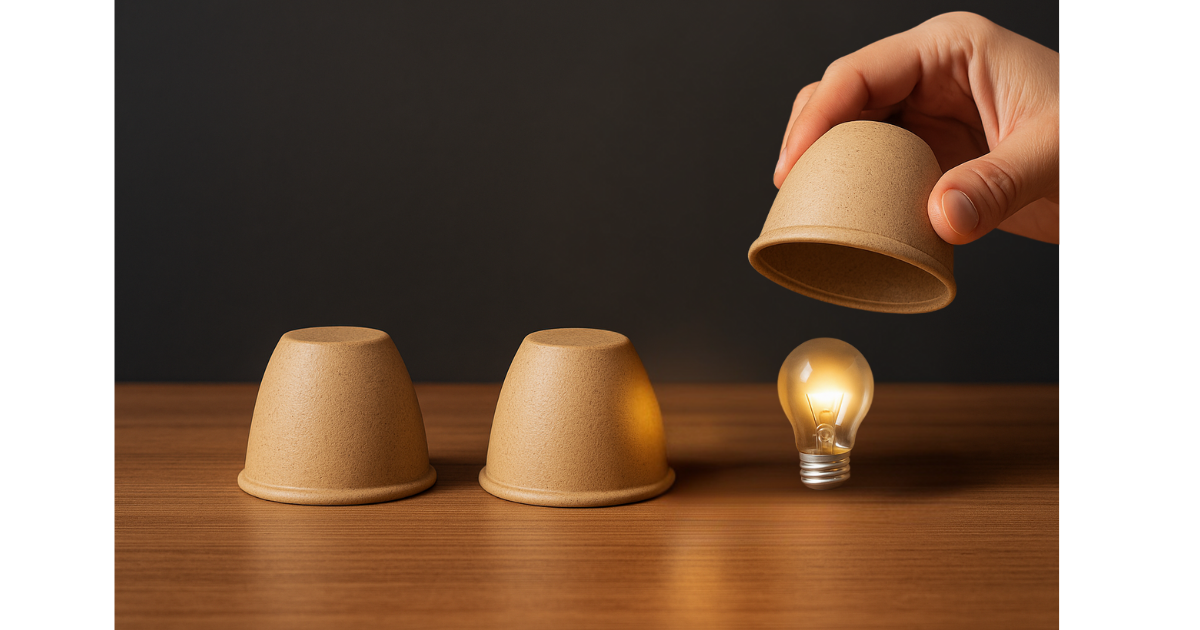
The Mental Shell Game
Ever feel like your brain’s playing a game you didn’t agree to join? You chase the answer, it disappears. Then out of nowhere—it’s back. What if that moment isn’t forgetfulness?

What About…?
We’ve all done it—blurted out, “But what about…?” when emotions run high. It feels harmless, but it’s actually the brain’s quick way of dodging discomfort.

Rewriting Reality to Feel Safe
Sometimes bending reality feels easier than facing the truth. But each time you choose honesty, even when it hurts, you strengthen the part of you that knows you can stand on your own. This reflection explores how self-protection can keep us stuck—and how truth, though uncomfortable, becomes the foundation for real safety.

Advice or Empathy?
Advice shows up fast—sometimes from us, sometimes toward us. It’s how the brain tries to create safety in uncertainty. But empathy offers something deeper: connection. This piece explores why advice feels so natural, what our nervous system is really asking for, and how to tell when to fix—or simply feel.